Contents
- 1 The Ultimate 70/10/10/10 Rule: The Simple Formula to Stop Living Paycheck to Paycheck
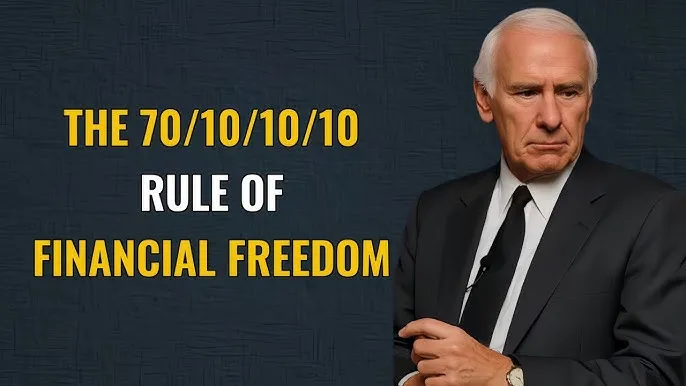
- 2 What is the 70/10/10/10 Rule? The Four Buckets Explained
- 3 Why This Simple Budgeting Formula is So Effective
- 4 How to Start the 70/10/10/10 Rule Today (A Practical Guide)
- 5 The Big “What If?” (When 70% Isn’t Enough)
- 6 Conclusion: Stop Surviving, Start Building
- 7 Frequently Asked Questions (FAQs)
The Ultimate 70/10/10/10 Rule: The Simple Formula to Stop Living Paycheck to Paycheck
Let’s have a very honest conversation. Does this sound familiar? You get your salary. You feel a brief, two-second rush of security. And then, it begins. The EMI payment. The rent. The credit card bill. The electricity bill. The groceries. You pay for a couple of dinners out, a new shirt, and suddenly, you’re 10 days away from your next payday, looking at your bank account and wondering, “Where did it all go?”
This is the “paycheck to paycheck” cycle, and it is a silent epidemic of stress. It’s that constant, low-grade anxiety that you’re just one car repair or one unexpected medical bill away from a full-blown financial crisis. It’s the feeling of running on a hamster wheel, working harder and harder but never actually getting ahead. You’re not broke, but you’re not building wealth. You’re just… surviving.

Many people try to fix this with budgeting. You download an app, you read about the 50/30/20 rule, and you try to categorize every single purchase. “Was that coffee a ‘need’ or a ‘want’?” It’s exhausting. It’s complicated. And for most of us, it lasts about three weeks before we give up.
What if there was a simpler way? A more human way? A system so simple, you could calculate it on the back of a napkin, but so powerful it could fundamentally break the paycheck-to-paycheck cycle forever? There is. It’s called the 70/10/10/10 rule, and it’s less of a budget and more of a “life plan” for your money. This isn’t about restriction; it’s about freedom. This guide will break down this simple budgeting formula, why it works so well, and how you can start using it today to finally stop living paycheck to paycheck and start building a life of financial freedom.
What is the 70/10/10/10 Rule? The Four Buckets Explained
The 70/10/10/10 rule is a beautifully simple framework for dividing your *after-tax* income (the money that actually hits your bank account). Instead of 20 different categories, you have just four “buckets.” Your entire financial life is organized into these four jobs. Here is the breakdown.
Bucket 1: 70% for Living Expenses (Your Present Life)
This is the first and largest bucket. Seventy percent of your take-home pay is allocated to your *entire* lifestyle. This includes all your needs and your wants.
- The Needs: This is the non-negotiable stuff. Your rent or home loan EMI, your utility bills (electricity, water, gas), your phone and internet bills, your groceries, your transportation costs (car fuel, public transport), and any insurance premiums.
- The Wants: This is also part of your 70%. This is your “fun money.” It includes dining out, going to the movies, buying new clothes, your Netflix subscription, a short vacation, and hobbies.
This is a critical distinction. Unlike other budgets, the 70/10/10/10 rule doesn’t make you feel guilty for spending money on a “want.” It’s already allocated. As long as you keep your total lifestyle (needs + wants) within this 70% portion, you are free to spend it however you like, 100% guilt-free. You’ve already taken care of everything else.
Bucket 2: 10% for Investing (Your Future Self)
This is the most important bucket for building wealth. This 10% is not for saving; it is for *investing*. This is your “pay yourself first” money. This is the portion of your income dedicated to growing and working for you. This is your engine for financial freedom. This money is earmarked for long-term growth and should go into assets like:
- Equity Mutual Funds (preferably via a Systematic Investment Plan, or SIP)
- Stocks
- Your National Pension System (NPS) contribution
- Other long-term, growth-focused investments
This 10% is non-negotiable. It’s the first bill you pay every month—a bill to your future self. This is the habit that, over 10, 20, or 30 years, will compound into a corpus you can retire on. This is how you stop living paycheck to paycheck permanently, by building a nest egg that will one day pay you.
Bucket 3: 10% for Saving (Your Safety Net)
Wait, isn’t this the same as investing? Absolutely not. This is a crucial difference that the 70/10/10/10 rule makes clear. Investing is for long-term *growth* (and carries risk). This 10% for “saving” is for short-term *security* and *goals*. This money needs to be kept safe and liquid (easy to access).
This 10% bucket has two primary jobs:
- Building Your Emergency Fund: This is priority number one. This 10% should first be used to build an emergency fund of at least 3 to 6 months of your 70% living expenses. This is your shield. This is what stops an unexpected car repair, medical bill, or job loss from forcing you into debt.
- Funding Short-Term Goals: Once your emergency fund is full, this 10% bucket becomes your “goal” fund. This is for things you want to buy in the next 1-3 years. A down payment on a car. A big international vacation. A new laptop. You save for it here, in a safe place like a high-yield savings account or a short-term fixed deposit, and buy it with cash.
Bucket 4: 10% for Giving (Your Wealth Mindset)
This is the part of the 70/10/10/10 rule that many people find revolutionary. It allocates a full 10% of your income to “giving.” This can be whatever “giving” means to you:
- Donations to a charity you care about.
- Helping your parents with their expenses.
- Giving a generous gift to a friend.
- Taking your family out for a lavish meal.
- Tithing, if you are religious.
This bucket is psychologically powerful. When you are stuck in a paycheck-to-paycheck cycle, you live in a “scarcity mindset.” You feel like you never have enough. By intentionally setting aside 10% to give away, you are sending a powerful signal to your own brain: “I have more than enough. I have enough to take care of myself and to help others.” It breaks the scarcity cycle and builds an “abundance” or “wealth” mindset, which is a critical, and often-missed, part of financial success.
Why This Simple Budgeting Formula is So Effective
The 70/10/10/10 rule isn’t just a set of numbers; it’s a complete psychological system for retraining your relationship with money. Here’s why it works so well.
It Is Radically Simple
You don’t need a complex spreadsheet with 30 categories. You have four buckets. That’s it. You can calculate your four numbers in 30 seconds on your phone’s calculator. This simplicity is its greatest strength. A complex budget is a “perfect” budget you will never follow. This is a “good enough” budget you will *actually* stick with, and consistency is what builds wealth.
It Is a Complete Financial Plan
This simple budgeting formula is beautiful because it’s balanced. It forces you to take care of all four critical areas of your financial life at once:
- Your Present (70%)
- Your Future (10% Investing)
- Your Security (10% Saving)
- Your Mindset (10% Giving)
Most people who are living paycheck to paycheck are only focused on the 70%, and even that is spilling over. Most budgets only focus on the 70% (spending) and the 10% (saving). The 70/10/10/10 rule ensures your “future” and your “mindset” are never neglected. It’s a holistic plan.
It Automatically Defeats “Lifestyle Creep”
Here is the hidden genius of this rule. What happens when you get a 20,000 rupee raise? For most people, their “70% Living” bucket just expands by 20,000 rupees. They get a nicer car, a bigger apartment, and are right back to living paycheck to paycheck, just at a higher level. This is “lifestyle creep,” and it’s why many high-earners are still broke.
The 70/10/10/10 rule builds the antidote right in. You get a 20,000 rupee raise? Great.
- Your “Living” fund goes up by 14,000 (You get a lifestyle upgrade!)
- Your “Investing” SIP automatically goes up by 2,000.
- Your “Saving” goal fund automatically goes up by 2,000.
- Your “Giving” amount automatically goes up by 2,000.
You get to enjoy your raise, but your wealth-building and security *also* accelerate. This is how you actually get ahead, not just tread water. This is a concept that is critical, whether you are waiting for a salary hike from the 8th Pay Commission or just your annual appraisal.
How to Start the 70/10/10/10 Rule Today (A Practical Guide)
This all sounds great, but how do you actually *do* it? Do not rely on willpower. You must use the most powerful tool in finance: automation.
Step 1: Know Your Number
Look at your last payslip. Find the “Net Pay” or “Take-Home Pay.” This is the number that hits your bank account after all taxes and deductions. Let’s say it’s 80,000 rupees.
- 70% Living: 56,000
- 10% Investing: 8,000
- 10% Saving: 8,000
- 10% Giving: 8,000
Step 2: Set Up Your Accounts
You will need a few separate accounts for this to work.
- Your main Salary/Checking Account (for the 70%).
- A Demat/Investment Account (for the 10% Investing).
- A High-Yield Savings Account (for the 10% Saving/Emergency Fund).
- A separate Savings Account (for the 10% Giving).
Step 3: Automate Your 10/10/10
This is the secret. Do not trust yourself to “remember” to save. Log in to your net banking portal *right now*. Set up automatic, recurring transfers to go out the day *after* your salary comes in.
- Transfer 1: 8,000 rupees to your investment account. (Then, set up an 8,000 rupee SIP in that account).
- Transfer 2: 8,000 rupees to your high-yield savings account (your Emergency Fund).
- Transfer 3: 8,000 rupees to your “Giving” account.
This is the entire system. It’s done. Your future, your security, and your mindset are all handled within 24 hours of you getting paid. You are now “paying yourself first.”
Step 4: Live on the 70%, Guilt-Free
What’s left in your main salary account? 56,000 rupees. That is your money for the month. You are free to spend all of it. If you want to buy a 3,000 rupee pair of shoes, you can. You don’t have to feel guilty, because you know your investments are already bought, and your savings are already set aside. This is real financial freedom.
The Big “What If?” (When 70% Isn’t Enough)
I can hear what some of you are thinking. “70%? My rent and EMIs alone are 60%! I can’t possibly live on 70%.”
If you are in this situation, do not give up. The 70/10/10/10 rule is not a pass/fail test. It is a diagnostic tool. It is a mirror. If you calculate your numbers and find that your “needs” are eating up 80% or 90% of your income, the rule has just done its job. It has given you a crystal-clear diagnosis of your financial problem.
If you are in this spot, you cannot start at 70/10/10/10. You must *work your way there*. Start with a 85/5/5/5 rule. Or even a 90/5/3/2 rule.
- Your Goal: Live on 85%.
- Invest 5% (Start an SIP for just 4,000 rupees).
- Save 5% (Build your emergency fund with just 4,000 rupees).
- Give 5% (Maybe just 2,000 rupees).
The percentages are not magic. The *habit* is. The act of automating your savings and investments, even if it’s a small amount, is what builds the muscle. From there, you have two clear goals:
- Cut Your 85%: Track your spending for one month. Be ruthless. Find the leaks. Cancel the subscriptions you don’t use. Cook at home three more nights a week.
- Increase Your Income: Look for a side hustle. Ask for a raise. Develop a new skill.
As your income goes up and your expenses go down, you can slowly adjust your percentages until you reach the 70/10/10/10 goal. This is a journey, not an overnight switch. It’s a fundamental part of your financial health, just like keeping your PAN card details updated. For more on financial literacy, you can always check out resources from India’s financial regulators, like the SEBI investor guide.
Conclusion: Stop Surviving, Start Building
Living paycheck to paycheck is a prison. It’s a cycle of stress that robs you of your peace of mind and your future. The 70/10/10/10 rule is your key. It is a simple, balanced, and powerful formula to finally break free.
It’s not about complex math or depriving yourself. It’s about a simple, automated system that puts your money to work. It builds your future, protects your present, and, most importantly, changes your entire mindset. Don’t spend another month wondering where your money went. Take 15 minutes today. Calculate your four buckets, set up your automatic transfers, and take your first real step to stop living paycheck to paycheck for good.
Frequently Asked Questions (FAQs)
Q: What is the 70/10/10/10 rule?
A: It’s a simple budgeting formula where you divide your take-home pay: 70% for living, 10% for investing, 10% for saving, and 10% for giving.
Q: What’s the difference between the 10% for investing and 10% for saving?
A: Investing (10%) is for long-term growth (like mutual funds) and carries risk. Saving (10%) is for security (emergency fund) and short-term goals, and must be kept safe.
Q: Is the 70/10/10/10 rule good for beginners?
A: It is one of the best budgeting rules for beginners because it is so simple to calculate and automate.
Q: What if I have a lot of debt (like an EMI)?
A: Your EMIs (debt repayments) must come out of your 70% “Living” bucket. If this makes 70% impossible, start with a smaller percentage (like 5/5/5) and work your way up.
Q: Does the 70% for “living” include fun and entertainment?
A: Yes. Your 70% is for all your needs (rent, groceries) and your wants (dining out, movies, shopping), giving you a guilt-free spending amount.