Contents
- 1 The Old Nightmare: Why Was KYC Such a Pain?
- 2 The Big Change: What is the New “Simplified KYC Process SBI” Is Proposing?
- 3 How to Update KYC Online in SBI: A Step-by-Step Guide (The New Way)
- 4 Documents Required for SBI KYC (If You DO Have Changes)
- 5 Why Is This Periodic KYC So Important, Anyway?
- 6 How Often Must I Update My KYC? (The Risk Categories)
- 7 Conclusion: A Massive Win for Customer Convenience
- 8 Frequently Asked Questions (FAQ)
Let’s be honest, few words in the Indian banking world spark as much collective dread as “KYC updation.” For years, this process has been synonymous with frustrating branch visits, confusing paperwork, and the dreaded hunt for photocopies of your PAN and Aadhaar. It’s that bureaucratic speed bump that hits you just when you’re busy. State Bank of India (SBI), as the nation’s largest bank, is at the center of this, and millions of its customers have felt this pain. But now, in a move that signals a massive sigh of relief, SBI is set to completely simplify its KYC rules. This isn’t just a minor tweak; it’s a fundamental overhaul aimed at making the process faster, easier, and, most importantly, digital. This new, simplified KYC process SBI is rolling out is a game-changer for its customers.
The goal is to move away from the “visit the branch” default and embrace a more customer-friendly, 21st-century approach. But what exactly is changing? How will the new SBI KYC update online work? And what do you need to do to stay compliant and keep your account fully functional? This ultimate guide will walk you through the old frustrations, break down the revolutionary new process, explain what documents you’ll (still) need, and answer all your burning questions about the upcoming SBI new KYC rules. This is your essential guide to saying goodbye to KYC headaches.
The Old Nightmare: Why Was KYC Such a Pain?
To appreciate the good news, we first have to remember the bad old days (which for many, are still the “right now” days). The Reserve Bank of India (RBI) mandates all banks to perform “periodic updation” of customer KYC details. This is a non-negotiable anti-money laundering (AML) and counter-terrorism financing (CTF) measure. For banks, it’s a legal requirement; for customers, it’s been a recurring hassle.
The Frustrating “Visit the Branch” Cycle
The traditional process was a masterclass in friction:
- The Vague SMS: It usually started with a text message: “Dear Customer, your KYC is due. Please visit your home branch with your PAN and Aadhaar to avoid account-freezing.” Panic ensues.
- The Document Hunt: You’d have to find your original PAN card, original Aadhaar card, and then get photocopies of both.
- The Branch Visit: You’d have to take time off work to visit your “home branch” (often an inconvenience if you’d moved cities) during banking hours.
- The Form: You’d fill out a KYC updation form, attach your photocopies, and self-attest them.
- The Wait: You’d stand in line, submit the documents, and get a verbal “it will be done.”
This process was inefficient, costly (in time and paper), and incredibly annoying, especially in a world where you can do almost everything else online. For customers who had no changes to their details, the whole exercise felt pointless. The new SBI KYC update online process aims to eliminate this very scenario.
The Big Change: What is the New “Simplified KYC Process SBI” Is Proposing?
The new initiative from SBI, prompted by customer feedback and a nudge from the RBI, is all about digital empowerment. The core idea is simple: if your identity and address details have *not* changed, you should *not* have to visit the branch. The new SBI new KYC rules are built on this foundation of trust and technology.
Introducing C-KYC and Online Self-Declaration
The new, simplified process is expected to leverage India’s powerful digital infrastructure. Here’s what it will look like for most customers:
- Central KYC (C-KYC) Registry: The government has established a C-KYC registry. When you do your KYC once with a bank or mutual fund, your data is stored in this central, secure database. SBI can now simply pull your data from this registry, provided you’ve done C-KYC elsewhere. This means you don’t have to resubmit documents. This move is part of a larger push for a Unified ID update portal India.
- Online Self-Declaration: For the majority of customers whose details (like address or mobile number) are unchanged, the new process will be as simple as logging into their net banking (Onlinesbi) or YONO app and submitting a “self-declaration” stating that there are no changes to their KYC information.
- Email/Postal Option: For those not comfortable with apps, SBI is also enabling this self-declaration to be sent via your registered email address or even by post to your branch.
This means for 80-90% of re-KYC cases, the need to physically visit the bank will be completely eliminated. This is the heart of the simplified KYC process SBI is championing. It finally makes the process a 5-minute digital task, not a half-day physical errand.
What if Your Details *Have* Changed?
This is the important exception. If your address, name (e.g., after marriage), or mobile number has changed, a simple self-declaration isn’t enough. In this case, you *will* need to provide new proof documents. However, even here, the SBI new KYC rules are making it easier:
- Video KYC (V-KYC): For many cases, especially for new accounts or significant changes, SBI is increasingly using Video KYC. You can complete the process from your home via a video call with a bank official, where you show your original PAN card and Aadhaar and sign on a blank paper.
- Branch Flexibility: While you might need to submit documents, the old “home branch” restriction is also easing. You can often submit your documents at *any* SBI branch, not just the one where you opened your account.
The goal is clear: use technology to make the process as painless as possible. The SBI KYC update online is the new default, and a branch visit is the exception.
How to Update KYC Online in SBI: A Step-by-Step Guide (The New Way)
So, you’ve received that SMS or email. Don’t panic. Here is how to update KYC online in SBI for the most common scenario (no change in details).
- Log In to Your Account: Access your SBI net banking (Onlinesbi) or open your YONO mobile app.
- Navigate to the KYC Section: Look for a tab or menu option that says “Update KYC,” “KYC Updation,” or “Re-KYC.” This is often found under the “My Accounts,” “Profile,” or “Services” section.
- Review Your Details: The portal will display the KYC details (address, PAN, Aadhaar) that are currently registered with the bank.
- Submit Your Self-Declaration: If all the details are correct and have not changed, you will see an option to confirm this. It might be a simple checkbox that says, “I confirm there is no change in my KYC details.”
- Authenticate the Request: You will likely need to authenticate this self-declaration, usually by entering a High-Security OTP (One-Time Password) sent to your registered mobile number.
- Get Confirmation: Once submitted, you should receive an instant confirmation on the screen and via SMS that your KYC has been updated.
That’s it. The entire process of how to update KYC online in SBI can be completed in less time than it takes to drink a cup of tea. It’s a massive improvement and a relief for millions.
Documents Required for SBI KYC (If You DO Have Changes)
If you are in the minority of users who *do* need to change their address or other details, you will need to provide proof. The list of documents required for SBI KYC has become much more streamlined and is primarily based on Aadhaar.
You will generally need:
- Proof of Identity (POI): Your PAN card is the most important. Aadhaar, Passport, or Voter ID also work.
- Proof of Address (POA): Your Aadhaar card is the most preferred and easiest document. If your Aadhaar doesn’t have the new address yet, you can use a recent utility bill (electricity, telephone), a rental agreement, or your passport.
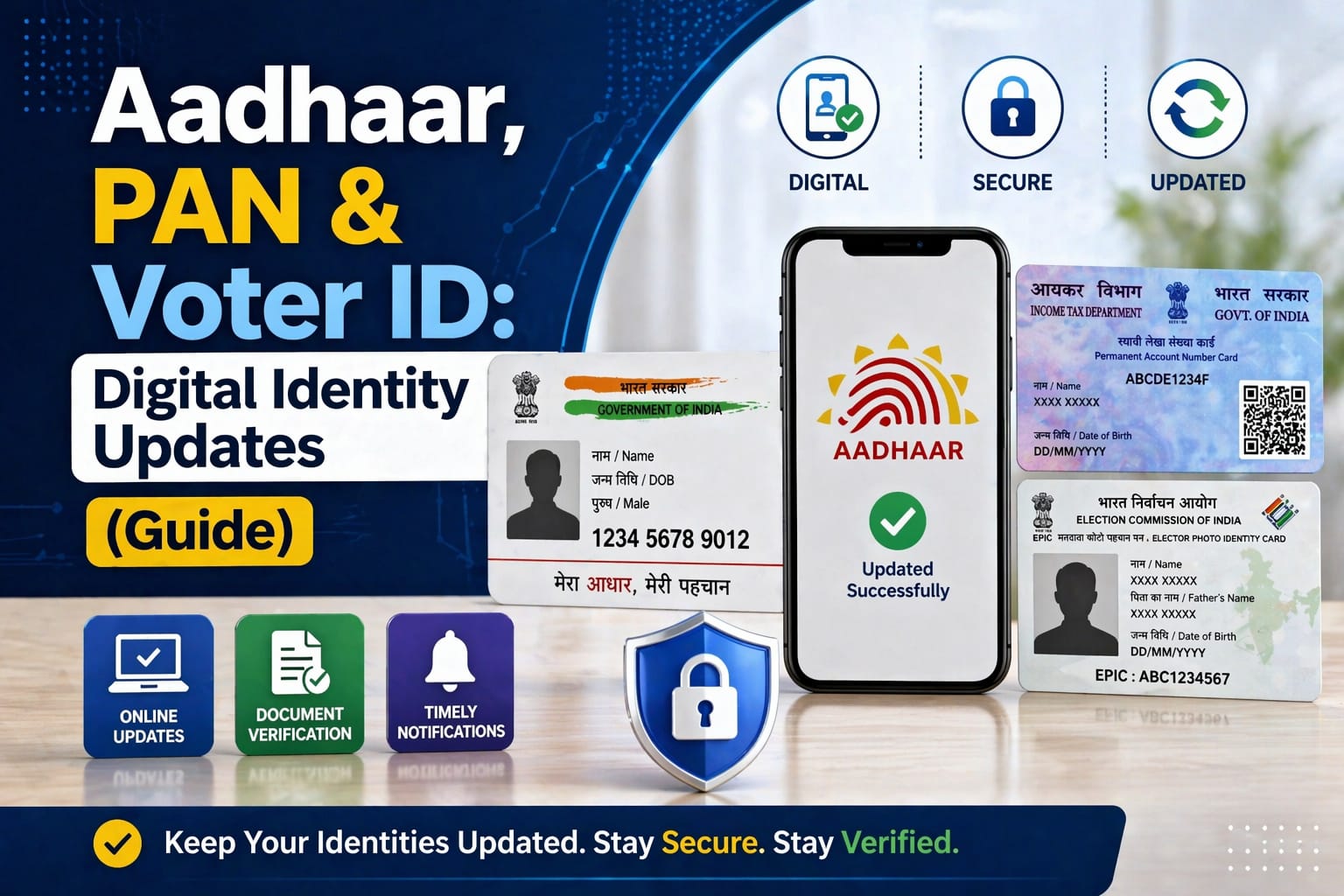
The simplest way to handle an address change is to first update your address on your Aadhaar card (which is a separate online process). Once your Aadhaar is updated, you can use it as the single document for your bank KYC update. This seamless integration of digital IDs is a core part of the Digital India dream, a concept we explored in our guide to the Unified ID update portal India, which aims to connect all your documents.
Why Is This Periodic KYC So Important, Anyway?
It’s easy to see KYC as a pointless bureaucratic exercise, but it’s actually the single most important tool banks have to protect the financial system from crime. The RBI mandates these updates under the Prevention of Money Laundering Act (PMLA).
This is why it matters:
- It Prevents Money Laundering: By ensuring every account is linked to a real, verified person, it becomes much harder for criminals to use the banking system to “clean” illicit money.
- It Combats Fraud: It helps prevent identity theft and the opening of “benami” (fake) accounts that can be used to scam people. We see the devastating impact of such scams in cases like the recent trading frauds, which often use a web of fake accounts.
- It Fights Terrorism Financing: Ensuring a clean financial system is a matter of national security, preventing funds from flowing to terrorist organizations.
- It Keeps Your Account Secure: It ensures the bank has your current address and mobile number, so you receive all important alerts and communications about your account.
The “SBI KYC update online” is your small part in maintaining the integrity and security of the entire national financial system.
How Often Must I Update My KYC? (The Risk Categories)
The RBI has set clear “periodic updation” timelines based on customer risk profiles. Not everyone needs to update at the same frequency.
- High-Risk Customers: These customers (e.g., those with high-value transactions, Politically Exposed Persons) must update their KYC once every two years.
- Medium-Risk Customers: This category (which includes many standard salaried or business accounts) must update their KYC once every eight years.
- Low-Risk Customers: This includes basic savings accounts. They must update their KYC once every ten years.
Most of us fall into the 8 or 10-year categories. The new simplified KYC process SBI is implementing means that for most people, this 8-year “headache” will now just be a 2-minute “click” to submit a self-declaration.
Conclusion: A Massive Win for Customer Convenience
The move by SBI to finally embrace a truly digital-first approach for KYC updation is a massive win for its millions of customers. It’s a change that respects your time and leverages the powerful digital infrastructure that India has built. The new SBI new KYC rules, especially the online self-declaration, mean that for the vast majority of us, the days of the dreaded “KYC visit” are over.
So, the next time you get that KYC SMS from SBI, don’t panic. Simply log in to your net banking or YONO app, find the “Update KYC” section, and complete your self-declaration. It’s a small click that saves you a big trip, and it’s a perfect example of how banking in India is getting smarter. For the most authoritative rules on KYC, you can always refer to the official RBI Master Direction on KYC.
Frequently Asked Questions (FAQ)
1. Do I need to visit the SBI branch for my KYC update?
No, if your KYC details (like address) have not changed, you can complete the SBI KYC update online via self-declaration on the YONO app or net banking.
2. How often do I need to update my KYC with SBI?
It depends on your risk category: every 2 years (high-risk), 8 years (medium-risk), or 10 years (low-risk). Most normal customers fall into the 8 or 10-year brackets.
3. What are the documents required for SBI KYC?
If there’s no change, you don’t need any documents for online self-declaration. If your address has changed, you’ll need Proof of Address (like an updated Aadhaar card) and Proof of Identity (like a PAN card).
4. What happens if I don’t complete my KYC update?
The bank will first send you reminders, but if you don’t comply, they may put a partial or full freeze on your account, restricting transactions until you complete the KYC.
5. Can I use the SBI YONO app for how to update KYC online in SBI?
Yes, the YONO app is one of the primary platforms where SBI is making the simplified online self-declaration for KYC available.
Disclaimer: This guide provides information based on publicly available news reports and RBI guidelines as of October 2025. The specific features, availability, and procedures for the simplified KYC process are subject to final implementation by SBI. Always refer to the official SBI website or contact your branch for the most current information regarding your account.